


As the development of high-quality plant-based proteins and alternative proteins matures, the innovation challenge is no longer about whether alternatives can be made, but whether consumers will continue to choose them. While taste, texture and price remain essential, nutritional credibility is becoming the next decisive factor in long‑term trust.
This trend reflects growing scrutiny of ingredient lists, processing intensity and health claims. As a result, developers are increasingly asking a more fundamental question: are protein-rich foods delivering nutritional value only on paper or also in the human body?
Protein quality goes beyond formulation
Protein content alone tells only part of the story. What ultimately matters is how efficiently indispensable amino acids are released and made available during digestion. This is why protein quality metrics such as DIAAS (Digestible Indispensable Amino Acid Score) are gaining prominence among regulators, researchers and food developers.
DIAAS improves upon older metrices by accounting for the true ileal digestibility of each indispensable amino acid, rather than total protein digestibility. However, the relevance of DIAAS outcomes depends directly on how digestion is assessed. In other words, DIAAS is only as meaningful as the digestion model used to generate the underlying data.
INFOGEST: a fit‑for‑purpose starting point
To address this need, the INFOGEST static in vitro digestion method has become a widely adopted and internationally recognized approach for assessing protein digestibility. Developed by a global academic consortium, INFOGEST provides a standardized, reproducible and accessible framework for simulating upper gastrointestinal digestion under controlled conditions, enabling:
- Rapid screening and ranking of protein sources
- Identification of limiting indispensable amino acids
- Generation of data relevant for DIAAS‑oriented decision making
Because of its robustness and broad adoption, INFOGEST has been recommended by FAO for protein quality assessment and is currently being evaluated as a potential international standard (ISO/DIS 24167). ProDigest has implemented the INFOGEST.
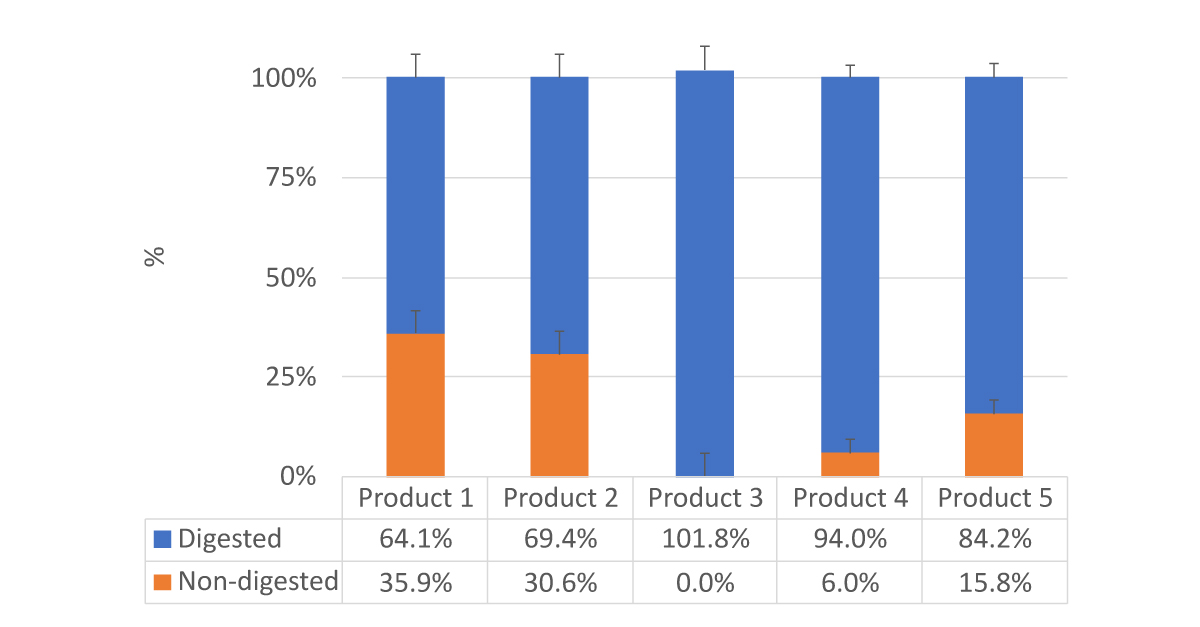
Non-digested and digested protein content measured at the end of the upper GIT incubation upon administration of different test products. Non-digested values were calculated based on the total and digested protein content measured at SI end. Measured protein contents of the negative control incubations were subtracted from measured protein contents of the test product incubations. Results are presented as proportional values (bottom; %).
When digestion complexity matters: going dynamic
While static in vitro digestion models are well suited for many applications, certain research questions require greater physiological resolution. Dynamic in vitro upper gastrointestinal models (such as the upperGIT-SHIME®) simulate time‑dependent changes in pH, enzyme activity, gastric emptying and intestinal conditions, allowing deeper insight into digestion kinetics and mechanisms.
Validation studies using dynamic upper GI models have shown that, across multiple protein sources (including pea, rice and dairy proteins) in vitro digestion can robustly reproduce key in vivo‑relevant outcomes:
- Comparable protein digestibility values
- Correct identification of the limiting indispensable amino acid
- DIAAS classifications aligned with FAO thresholds
Importantly, protein ranking remains consistent across static in vitro, dynamic in vitro and in vivo data. The difference between models lies primarily in depth of insight, not in directional outcome. This demonstrates that well‑designed in vitro digestion models can meaningfully reduce reliance on animal and clinical studies, while still supporting high‑confidence product decisions.
Conclusion: from lab insight to consumer trust
As high-quality plant‑based proteins and alternative proteins move from novelty to normality, understanding how proteins behave in the human gastrointestinal tract becomes essential. Digestibility bridges the gap between formulation choices and real nutritional outcomes, and ultimately between protein promise and protein performance.
By combining accessible static approaches such as INFOGEST with advanced dynamic digestion models (upperGIT-SHIME®) where needed, food innovators can build protein confidence grounded in physiology, not just formulation.
Curious how we can support your next plant-based product? Let’s talk!